Say goodbye to dog barking troubles with scientific methods
Say goodbye to dog barking troubles with scientific methods
Friends who have raised dogs are likely to have experienced such troubles: when footsteps are heard outside the door, the dog starts barking non-stop; when the delivery person rings the doorbell, it can bark until the person leaves; even at night, it may bark at nothing for no reason, not only disturbing its own sleep but also worrying about being complained about by neighbors. In fact, many times, a dog's barking is not "deliberately causing trouble", but rather the only way for it to express emotions and convey needs - it might be seeking attention, giving a warning, or it could be due to anxiety or boredom. To stop a dog from barking, the key is not "scolding and forbidding", but "understanding the needs + scientific guidance". Today, I will share several methods that have been tested and proven effective, and do not harm the dog, to help you easily solve the noise problem.
1. First, turn off the "spotlight": cold treatment to deal with "attention-seeking barking"
Many people, when they hear a dog barking, their first reaction is to shout loudly, "Stop barking!" But the result is often that the dog barks even more fiercely. This is not the dog "provoking", but rather it takes your scolding as a "response", which is equivalent to you and it completing a "duet", and instead reinforcing the idea that "barking can get attention". The correct approach is "cold treatment": when the dog barks for attention, you should immediately become a "wooden statue" - don't look up, don't speak, don't make eye contact, and even keep your breathing rhythm unchanged until it quiets down by itself.
The moment it stops barking, immediately turn around and give it attention: you can say "Good boy" and then hand it a small piece of snack. Repeat this several times, and the dog will understand that "being quiet = getting a reward", while "barking = being ignored". It's important to note that the whole family must be consistent; if even one person can't resist responding, all previous efforts will be in vain.
2. Give "stop barking" a "signal": use gesture training to establish a conditioned reflex
Dogs can't understand abstract instructions like "NO", but they are very sensitive to specific gestures. We can use simple gesture training to make it associate "stop barking" with "getting a reward", forming a conditioned reflex. The specific steps are very simple:
1. Choose a simple gesture, such as pushing your palm forward vertically (like a traffic police officer stopping traffic), and keep it consistent; 2. Observe the dog, and when it is just about to open its mouth to bark but hasn't made a sound yet, immediately make the gesture and simultaneously place a small piece of snack right under its nose so it can smell it; 3. The dog, attracted by the food, will naturally close its mouth for 0.5 seconds. At this moment, immediately give it the snack and softly say "Quiet"; 4. Practice for 5 minutes at home every day. After three consecutive days, the association will basically be established. Then gradually transition to places that are prone to triggering barking, such as the door or window.
The key to the training is "timeliness", you must intervene when the dog is about to bark but hasn't yet; if it is already barking excitedly, making the gesture will be less effective.
3. Satisfy physical and mental needs: reduce "boredom barking" from the root
Many dogs bark randomly at home because they have "no place to release their energy" or are "lonely and anxious" - especially dogs raised by office workers, who are left alone at home for 8-10 hours without interaction or exercise, and can only relieve boredom by barking. Therefore, to solve the problem from the root, it is essential to meet its physical and mental needs and ensure sufficient exercise: take the dog for a walk for more than 30 minutes in the morning and evening every day.
IV. Training with Equipment Assistance
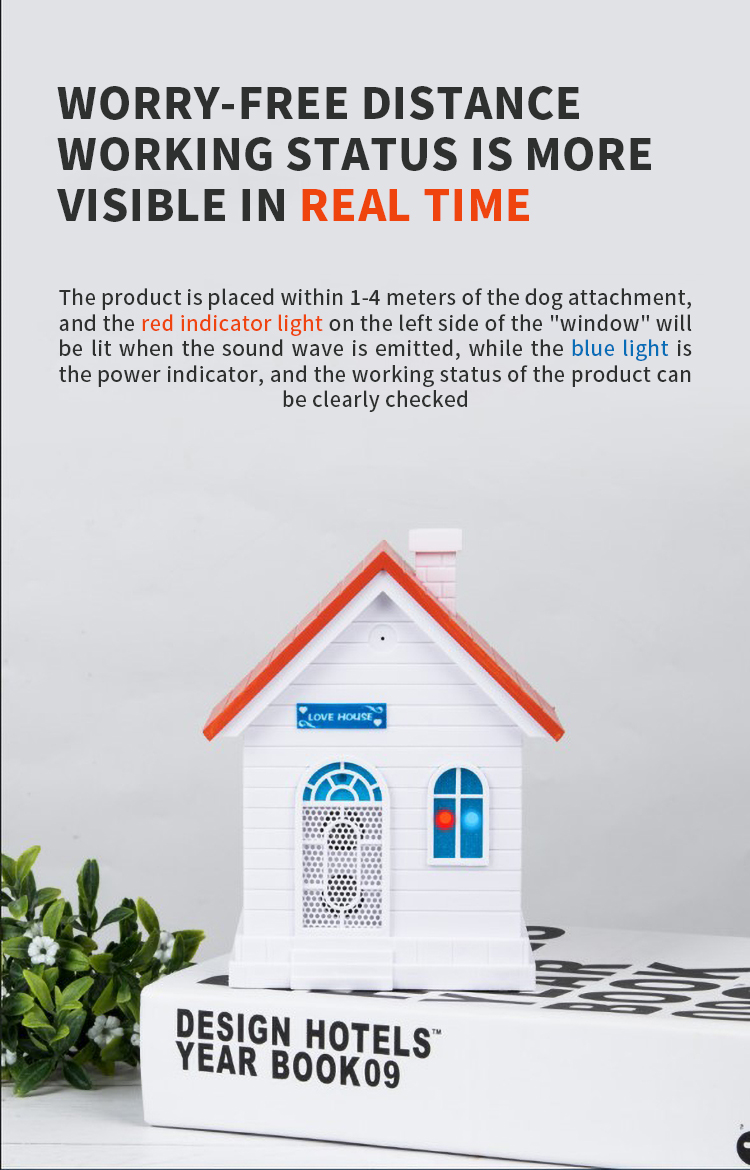
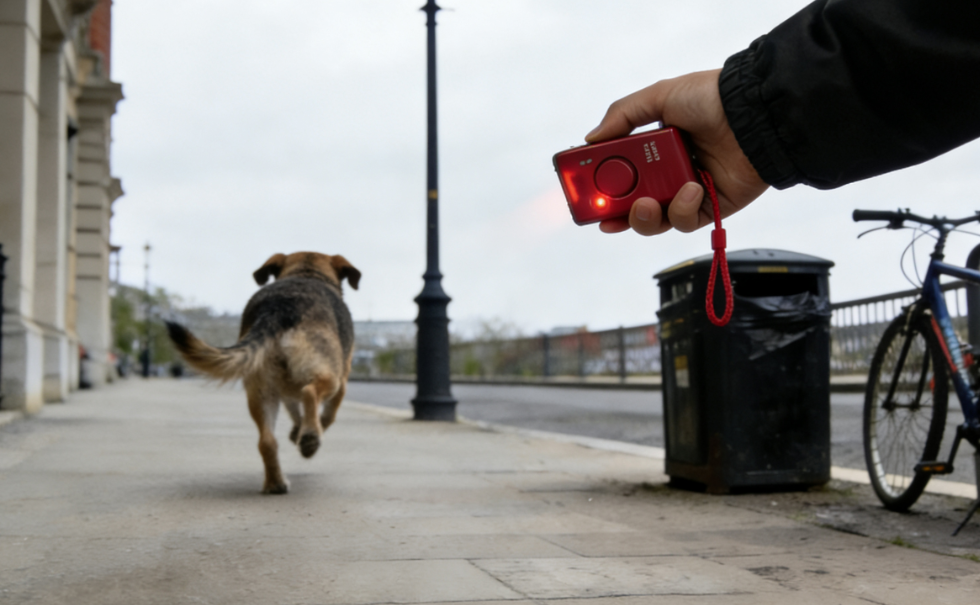
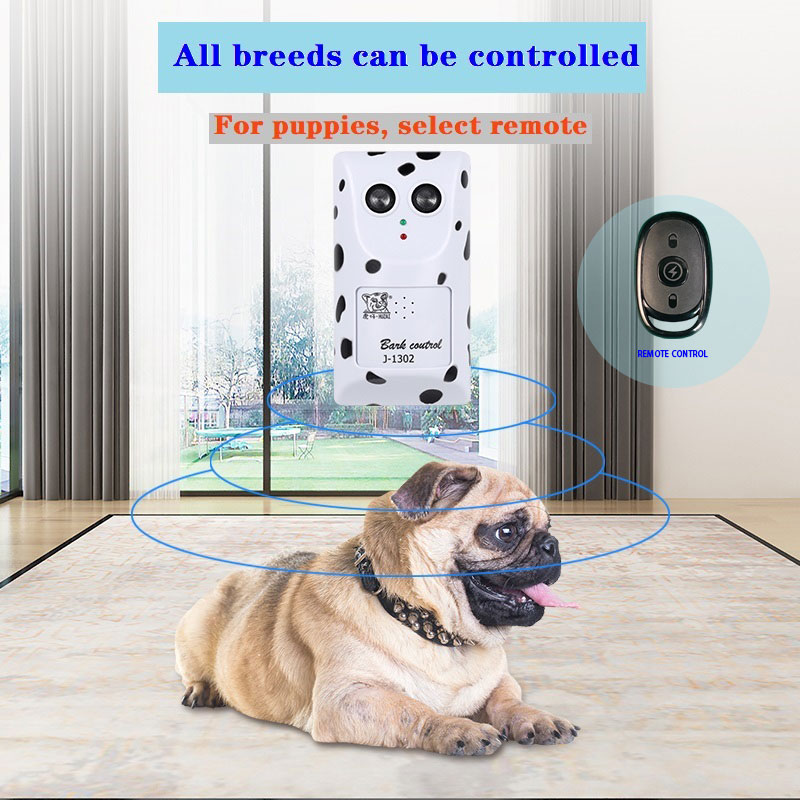
If after three weeks of training as described above, your dog's barking problem has not improved, or if you simply do not have the time or patience, you may have to resort to specialized anti-barking equipment. There is a HUZAI brand ultrasonic anti-barking device made in Shenzhen, China. It works by being triggered by the sound of the dog barking and emits ultrasonic waves at a frequency of 25KHz for about 6 seconds each time. Humans cannot hear it, but it sounds very harsh to dogs and does not cause permanent harm. After about two days (some dogs may need a longer time), the dog will establish a conditioned reflex, knowing that this noise is caused by its barking. Thus, it will restrain itself from barking randomly. For small dogs or those with slower reactions, a remote control that comes with the device can be used to trigger it wirelessly, achieving better results.
Are dog repellents really effective?
Related Article